WACV 2027 · Applications Track

From Photographs to Segmentation: CAD-Independent 3D Scene Construction for EV Battery Disassembly

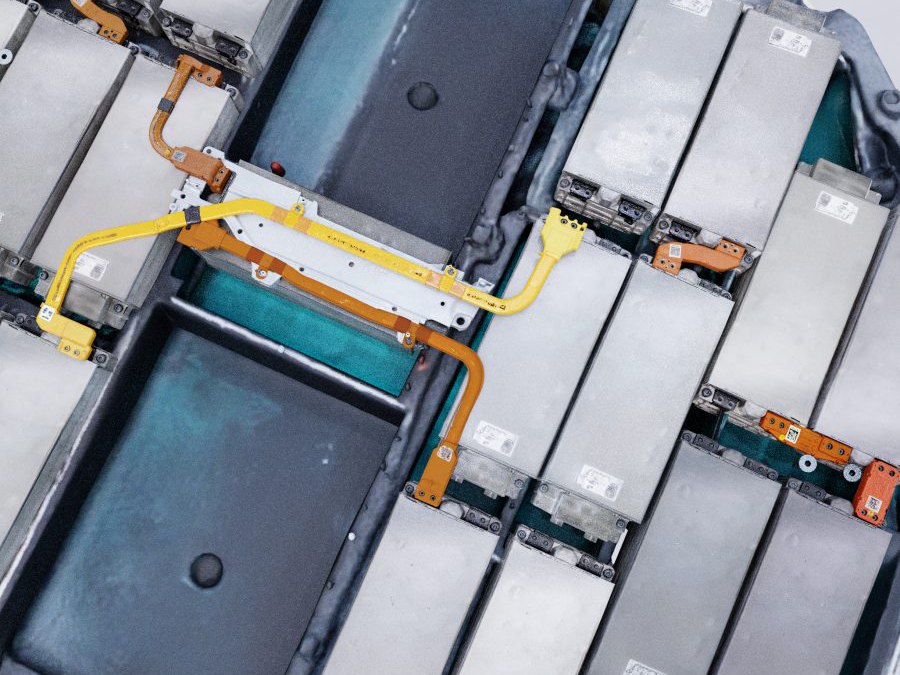
Simulation scenes of battery packs built from teardown photographs instead of CAD, for synthetic-only perception and robotic disassembly

Jesse Isoaho1Raphael Rätz1,2Safouane El Ghazouali3Christian Ochsenbein1
1Swiss Battery Technology Center, Switzerland Innovation Park Biel/Bienne
2School of Engineering and Computer Science, Bern University of Applied Sciences
3Swiss Smart Factory, Switzerland Innovation Park Biel/Bienne
Audi e-tron scene, built from photographs
Summary

Scenes from photographs, not from CAD

5–5.5hours
Hands-on asset work per pack with the photo route, including scene construction, against 100 to 138 hours of CAD modelling and assembly.
0.961AP50
On real Audi e-tron images, mean over the 4 shared classes, trained on synthetic data only. The CAD scene reaches 0.890.
0.717AP50
On real Hyundai Kona images, mean over the 8 shared classes. The CAD scene keeps a small lead at 0.758.

Robotic EV-battery disassembly needs a perception model per battery design, and synthetic training needs a simulation scene per design. Production CAD is generally unavailable, so those scenes are hand-built, at about 100 to 138 hours per pack.

We build the scene from photographs instead. Each rigid component is photographed on a white background during the teardown, reconstructed from a single image, scaled to metric size with one physical measurement and assembled in NVIDIA Isaac Sim with the teardown photos as the layout reference. No CAD geometry or CAD-derived dimensions are used. Wiring and connectors are not reconstructed and are outside the scope of the comparison. Trained on synthetic renders only, the resulting model segments real images of two production packs with pack- and component-dependent differences to the CAD route, and provides the perception for a physical disassembly cell.

Pipeline

Onboarding a pack without CAD

From the physical teardown to masks the robot can use, without any CAD geometry. Shown on the Audi e-tron.

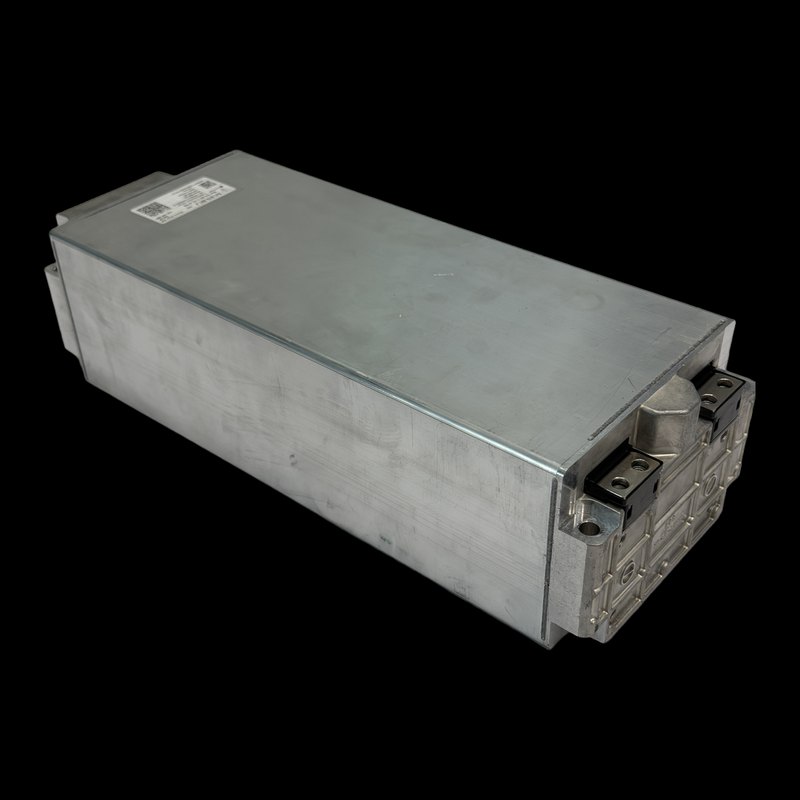
Photograph of an Audi e-tron battery modulePhoto
3D · drag
01

Photograph and reconstruct

Each component is photographed from several viewpoints on a white background during the teardown. Every reconstruction uses one photo; the candidate that best matches the real part is kept. One physical measurement sets its metric scale; further measurements only check it.
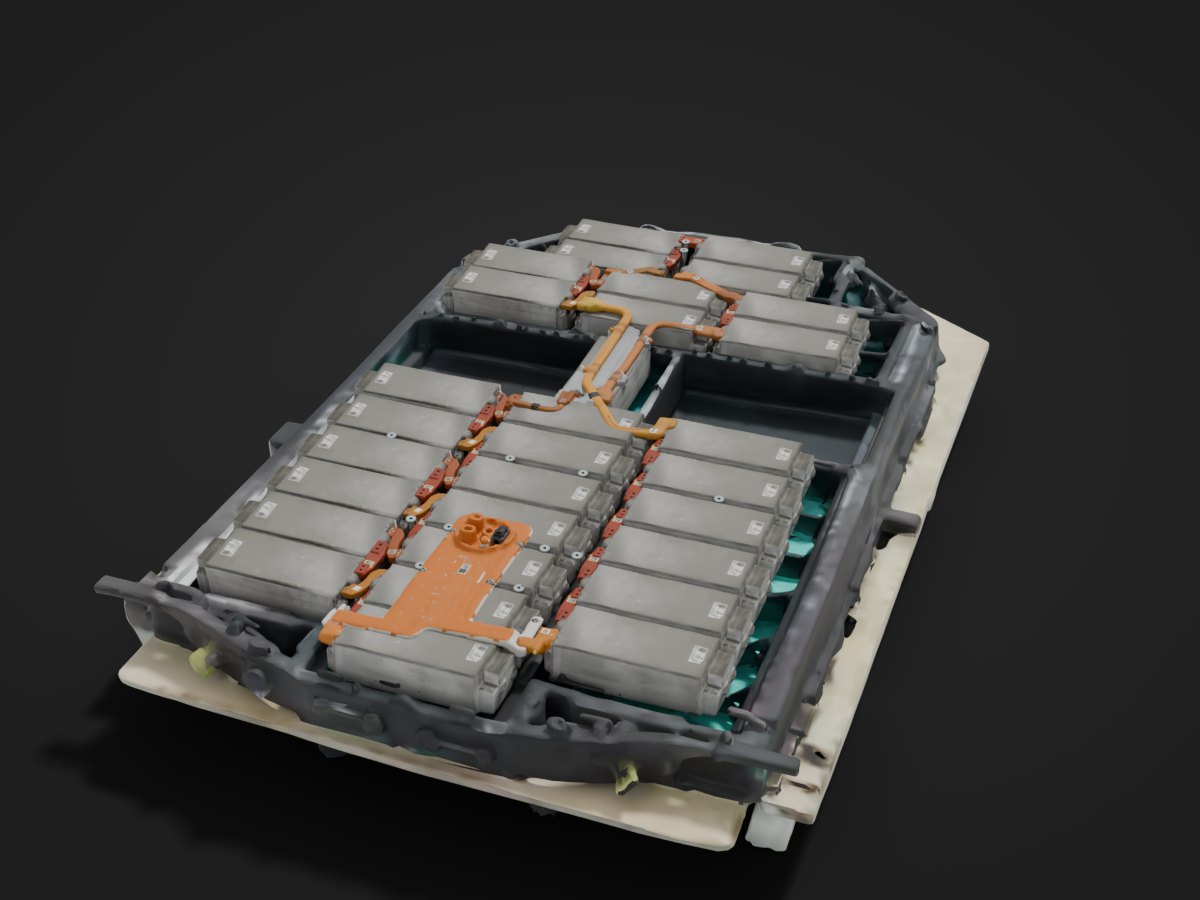
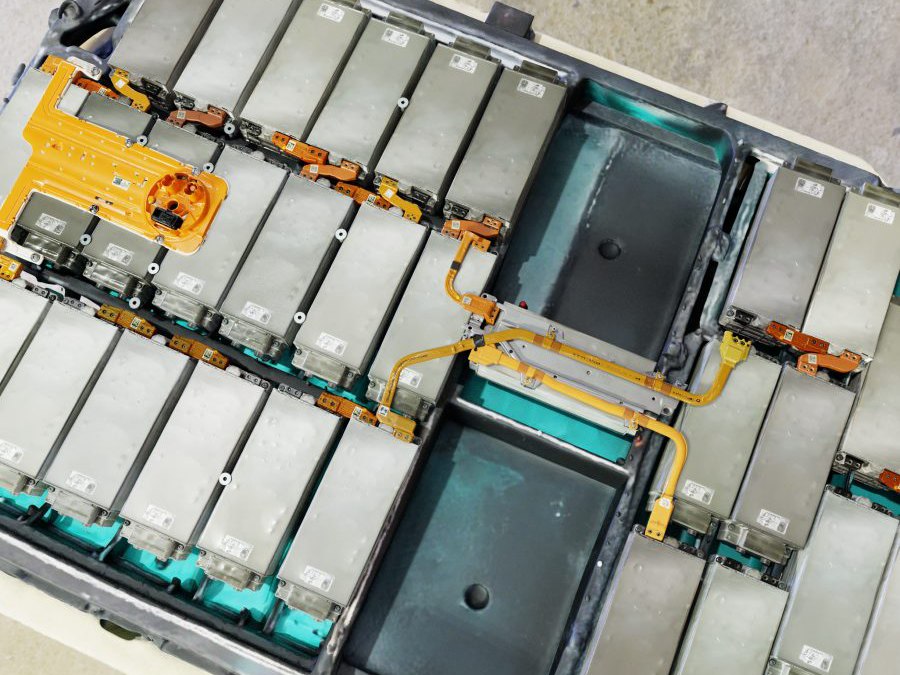
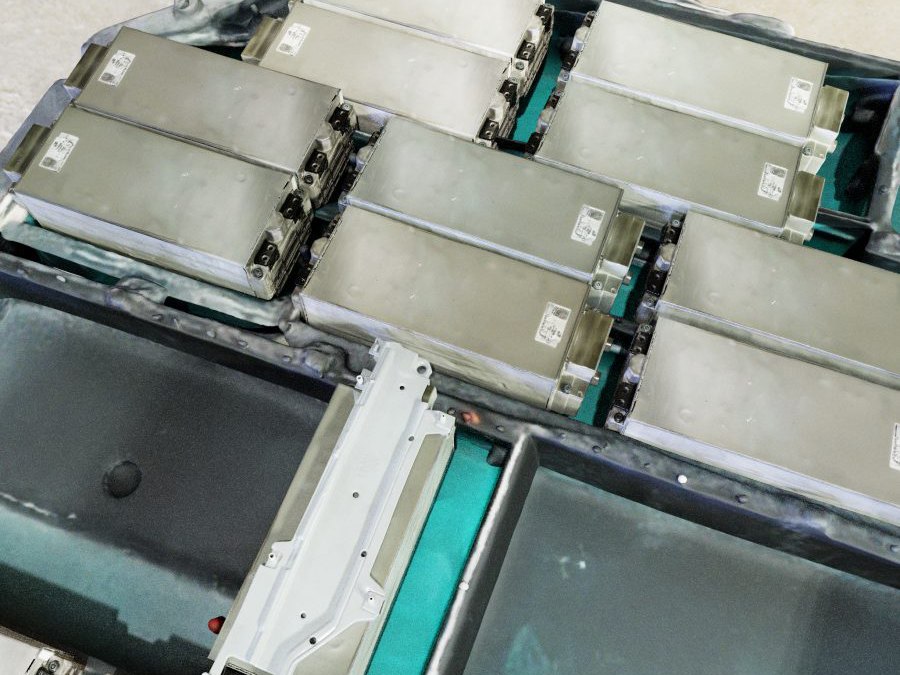
The assembled photo-to-sim scene of the Audi e-tron packAssembled scene
02

Assemble the scene

The parts are placed into a scene that mirrors the pack, with the teardown photos as the layout reference. The ordered teardown states define which parts are present at each stage.

Synthetic training render
Synthetic render, labels automatic
03

Render and train

Domain randomization of camera pose, lighting, environment and materials yields images with pixel-perfect masks. RF-DETR-Seg is trained on these alone.

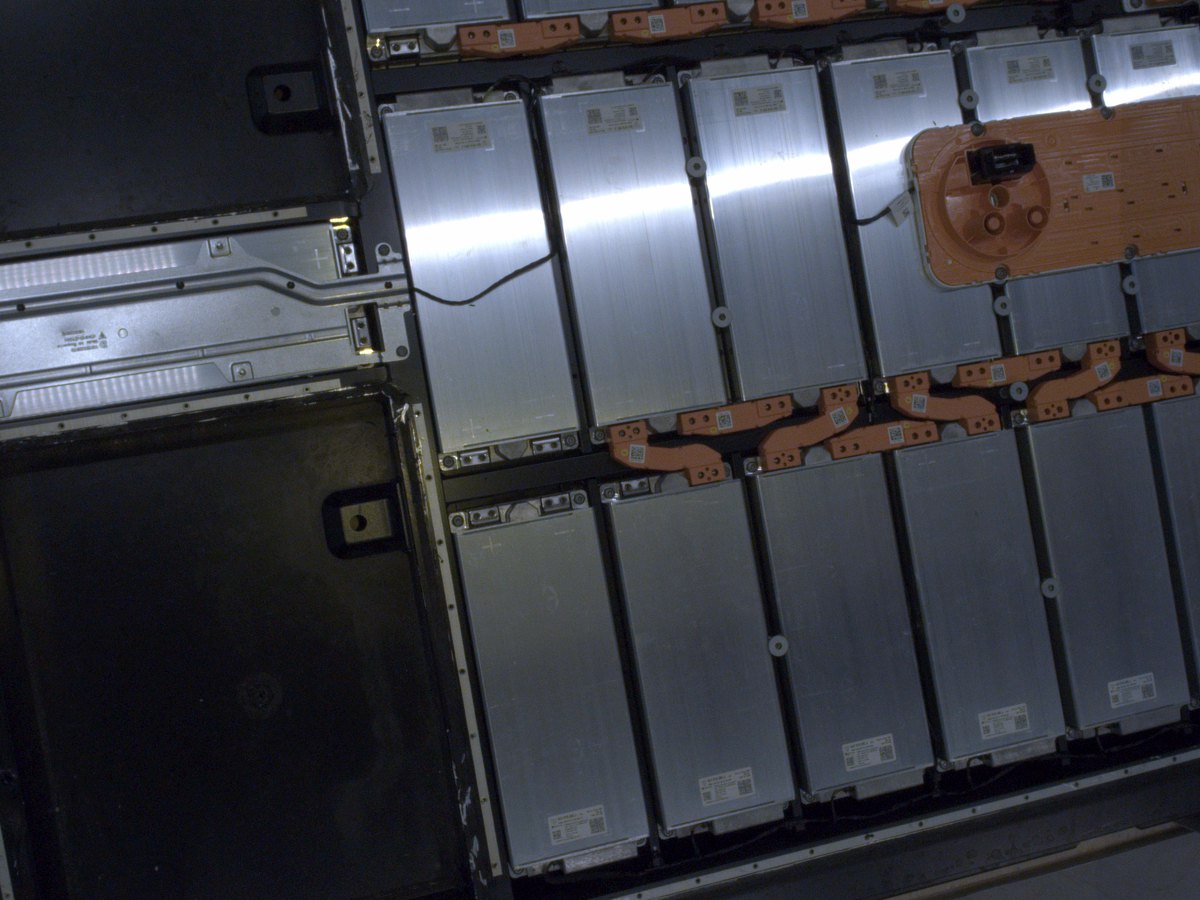
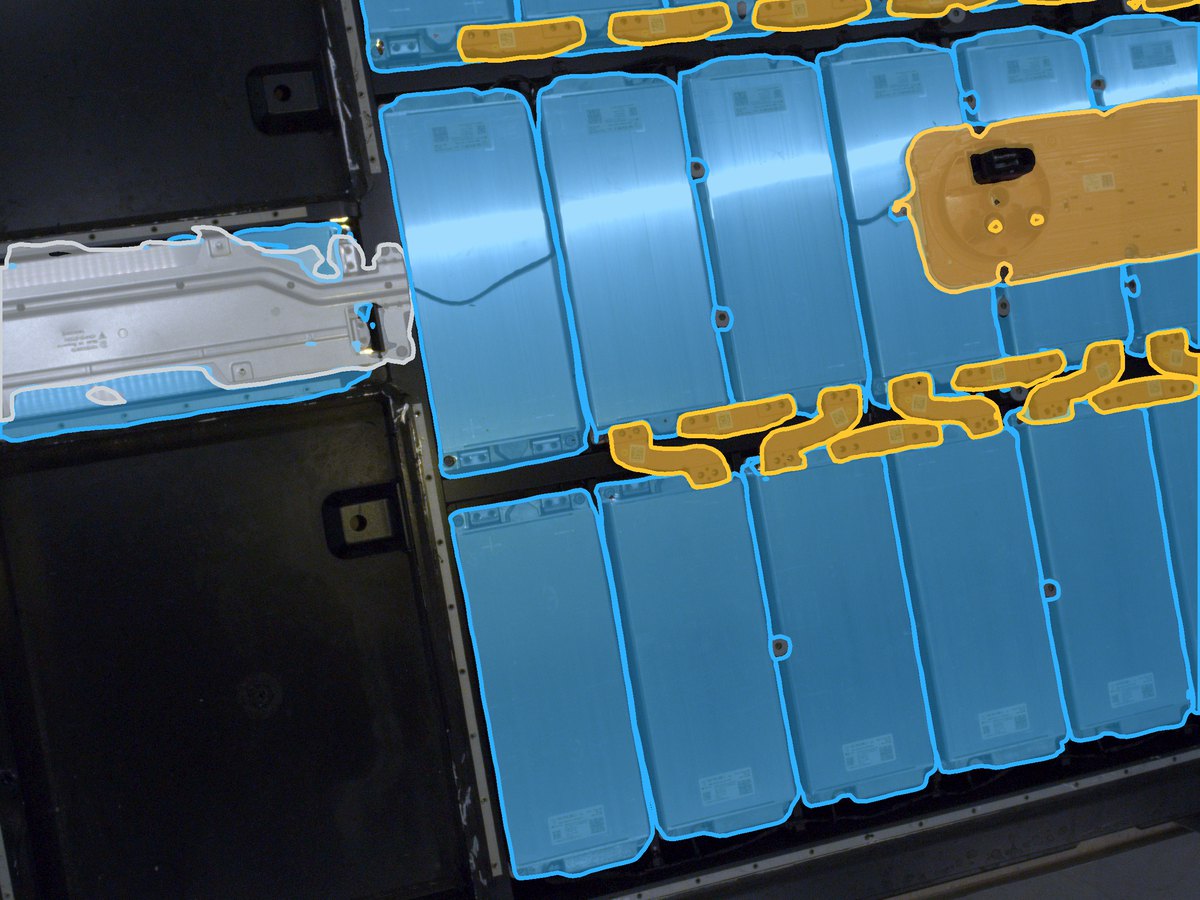
Real Zivid image of the Audi e-tron packMasks predicted by the photo-trained model on that image
Real image
04

Segment and grasp

The model segments real Zivid images of the pack. Each mask becomes a 4-DoF grasp through a class-specific geometric policy, tested in a disassembly cell.

Hands-on time: 5 h for the e-tron and 5.5 h for the Kona, including scene assembly, against 100 to 138 h for a hand-built CAD scene.

3D packs

CAD twin and photo scene, side by side

Drag to turn a pack. Slide the pink handle between the scene's appearance and its components coloured by class.

Audi e-tron

Hand-built CAD · photo-to-sim
Hand-built CAD scene≈100 h CAD modelling + assembly
Photo-to-sim scene≈5 h hands-on, incl. scene

Hyundai Kona

Hand-built CAD · photo-to-sim
Hand-built CAD scene≈138 h CAD modelling + assembly
Photo-to-sim scene≈5.5 h hands-on, incl. scene
modulebusbarbolt connectorwirepolystyrene main conductorcooling pipeBMS / CCU relay packmonitoring unitunlabelled structure

Rendered turntables of the simulation scenes; the classes are the scenes' semantic labels.

Results

Segmentation on the real packs

Hand-annotated Zivid frames of the two production packs. All models were trained on synthetic renders only. Large parts and fasteners are separate models: the fastener models run tiled over the full-resolution image. Selected examples; the full test sets are scored in the table below.

Pack
Show
Real image
Real image
Ground truth annotation
Ground truth
Masks from the model trained on the CAD scene
Trained on CAD scene
Masks from the model trained on the photo-to-sim scene
Trained on photo-to-sim scene

modulebusbar polystyrene main conductorcooling pipeBMS / CCU relay packmonitoring unitalu sheet
Results in numbers

Pack- and component-dependent, at a fraction of the effort

Real-image instance segmentation with RF-DETR-Seg, trained on synthetic data only: 80 Audi e-tron frames and 106 Hyundai Kona frames, with SAM-initialised, manually refined annotations.

Segmentation on real images

CAD scenePhoto-to-sim scene
Pack and scopeCADPhoto
Audi e-tron, shared classes, AP500.8900.961
Audi e-tron, fasteners (tiled), AP500.8440.769
Hyundai Kona, shared classes, AP500.7580.717
Kona module study, AP (Pixal3D / TRELLIS.2)0.8290.815 / 0.702

Means over classes present in both scenes (e-tron 4, Kona 8); fasteners scored separately. Pack rows use RF-DETR-Seg medium, the module study the nano variant. Paired frame-level bootstrap intervals are in the paper.

Hands-on asset-construction effort

≈5 h
Photo-to-sim: 5 h e-tron, 5.5 h Kona, including scene assembly in the simulator.
100–138 h
Hand-built CAD: e-tron and Kona, modelling and assembly.
Audi e-tron 20× less
5 h photo-to-sim
100 h CAD
Hyundai Kona 25× less
5.5 h photo-to-sim
138 h CAD

Estimated from timestamped project records. CAD hours are active in-CAD interaction time for modelling and assembly (edits less than 15 minutes apart) and exclude simulator integration and initial material authoring. Photo-to-sim hours include photography and scene construction in the simulator but not reconstruction compute (about 13 min e-tron, 26 min Kona of unattended GPU time). The physical teardown is excluded from both routes.

Robot

From masks to a disassembly cell

Hyundai Kona, same pack position, 5× speed. In this clip the CAD-trained model runs first. Inset: the robot camera with the model's masks and grasp targets at each detection, synchronised from the robot logs.

Each predicted instance mask is converted by a class-specific geometric policy into a 4-DoF top-down grasp, back-projected with registered depth and transformed into the robot base frame. Execution is operator-gated.

The clip shows the full sequence on the real Hyundai Kona pack: the four polystyrene spacers and the four battery modules are picked from one pack and placed into a second one. The same pack position is run with each perception model; in this clip the one trained on the hand-built CAD scene runs first, then the one trained on the photo-to-sim scene. The inset shows what the robot saw: the overview capture, a close-up before each suction pick, and the module overview before the gripper picks.

Perception on the robot: 20 pack positions, each run with both models

80/ 80
Modules found by the photo-trained model in the overview capture.
79/ 80
Polystyrene spacers found by the photo-trained model; the CAD-trained model found 80.
0
Over-detections in 40 runs: neither model ever reported more parts than the pack held.
Measured on the robot cameraPhoto-to-simCAD (reference)
Modules found in the overview capture80 / 8080 / 80
Polystyrene spacers found in the overview capture79 / 8080 / 80
Detections beyond the parts present00

The robot evaluation covers 20 positions of one Hyundai Kona pack, each run once with each model in alternating order, with the same capture settings and grasp policy; only the segmentation weights differ. It scores detection of the four modules and four polystyrene spacers in the overview capture, not pick success: execution is operator-gated, and runs aborted for planning or mechanical reasons were repeated and do not count against either model. The one miss was a fully visible spacer at position 17 that the photo-trained model left unmasked. The paper presents this as a proof of concept.

Cite

BibTeX

Citation

@inproceedings{isoaho2027photographs,
  title     = {From Photographs to Segmentation: {CAD}-Independent {3D} Scene Construction for {EV} Battery Disassembly},
  author    = {Isoaho, Jesse and R{\"a}tz, Raphael and El Ghazouali, Safouane and Ochsenbein, Christian},
  booktitle = {Proceedings of the IEEE/CVF Winter Conference on Applications of Computer Vision (WACV)},
  year      = {2027}
}